Review: Daughters of the Crow by Zetta Elliott
Rosetta Press, 2026, Readership Market: Adult
History can be terrifying, and it can be painful. It can teach us precisely what humanity is capable of under the right—or wrong—circumstances. But that is exactly why we must remember, taking in its brutality and its consequences unflinchingly. Such is what Daughters of the Crow, a new book by the award-winning author and poet Zetta Elliott, asks us to do as it relates to us the story of the 1562 Tours Massacre with startling detail and empathetic grace.
The Massacre was a horrifying religious dispute during 16th-century France, ruled by a Catholic French Crown, that saw the Huguenots, French Protestants following the teachings of John Calvin, violently take over a Catholic city for a short time before they were overthrown. As the beginning of Elliott’s book writes, “Engravings from the period show dogs and crows fighting over the many corpses being thrown into the Loire.”
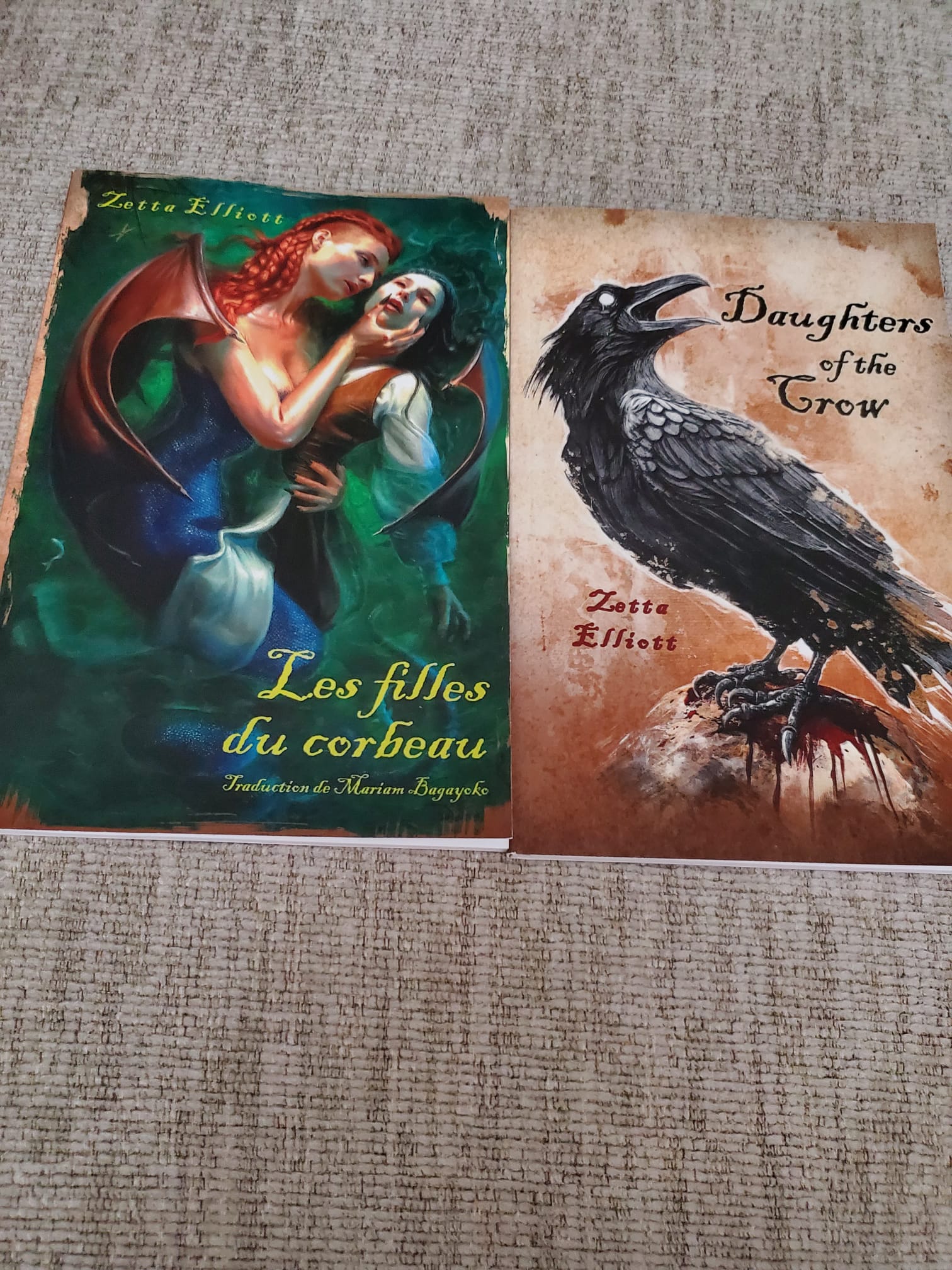
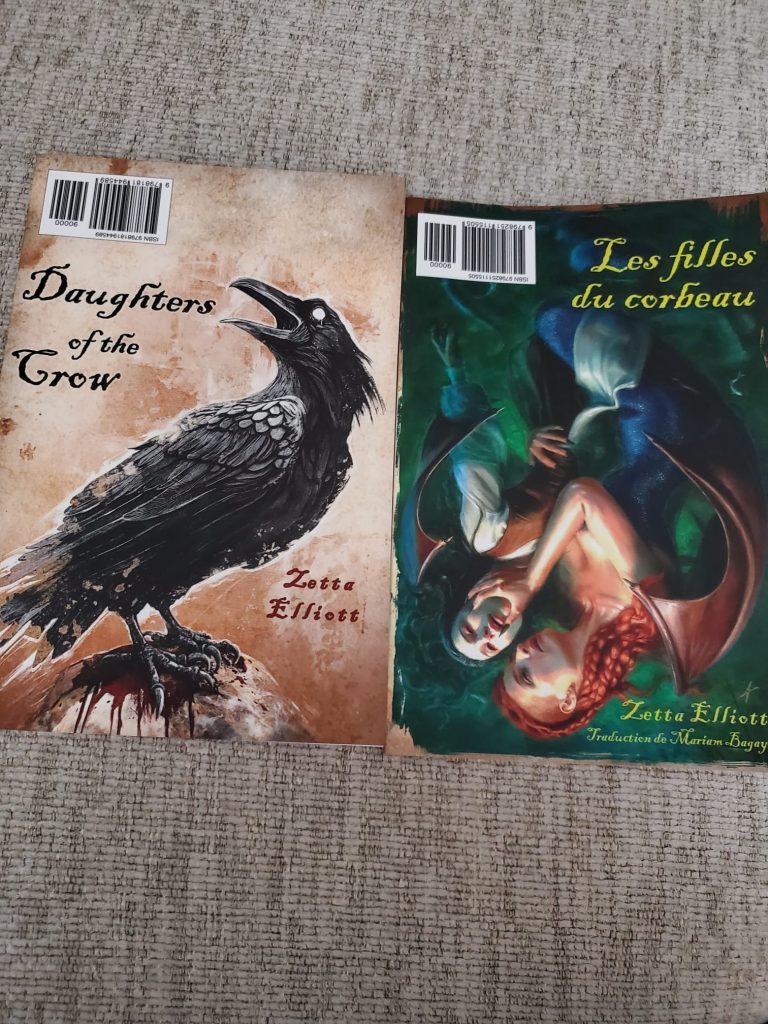
Elliott’s storytelling makes the violence visceral through experimental context and form. The story of the Massacre is given through three extremely vivid and personal female perspectives: the Catholic Berthaude, her rival Anne the Heretic, and the mythical Melusine, a fixture of European folklore, the toe-tailed water serpent, once treated as a death omen by French noble houses, signalling a time of great upheaval. These women relate their tales in English and French, sometimes upright, sometimes upside-down, mimicking the torturous disorder violence brings. Through war, the women’s lives are upended as their bodies and those around them are turned to corpses for crows and other secret beasts to feast upon.
That the narrative is told through the perspective of women is no mistake. Neither is Elliott’s decision to give the eponymous Crow the first narrative turn as a grounding device. Neither is the fact that the French mythical figure of Melusine—whose half-snake, half-female mermaid body is cursed and betrayed by men— bears witness. The text makes clear the gendered layers of The Tours Massacre. The voices of women and girls are often sidelined and silenced in stories of war despite disproportionate impacts. Here, Elliott invites us not to look away; her prose never shies from its duty to relay the atrocity experienced without abandoning her readers to the horror of this sectarian clash.
Such is what it means to be willing to learn about troubling histories. And only in staring history right in the eye and empowering the voices of the marginalized killed in its grasp can we think about justice and compassion in our present.
A Few Memorable Lines:
“I wish that I, too, could wield a sword and shield. But I am no warrior and can afford no protector so I try never to be alone with the master of the house. When I cannot avoid his attention, I close my eyes and focus on the moon inside my eyelids until it ends. Then I wash off his filth as best I can and give away the small coins he leaves behind to show me what I’m worth. He gives much more to the bishop to avoid the torment he so richly deserves. Careless with a candle and I could watch him burn before death but then where would we live? I spare my mother the distress and say nothing to the priest. Why should I seek absolution when the sin is not mine?” (6)
“Half-beings live half-lives in half-worlds. Betrayed by my beloved, I finally stopped hiding my true self and, on newly formed wings, took to the sky. But slings and arrows await any woman who dares to fly. Men cannot abide it so, by day, I hide my glory, my power, my curse. I raised my sons to hold no shame for the physical differences they inherited from me. Why should such distinctions hinder them – or me? Or this scavenged girl.” (20)
OUT NOW: DAUGHTERS OF THE CROW. An illustrated narrative poem about the French Wars of Religion inspired by my Huguenot ancestors.
You May Also Like